Craft
Why is my website getting traffic but no leads?
21 September 2026 · 7 min
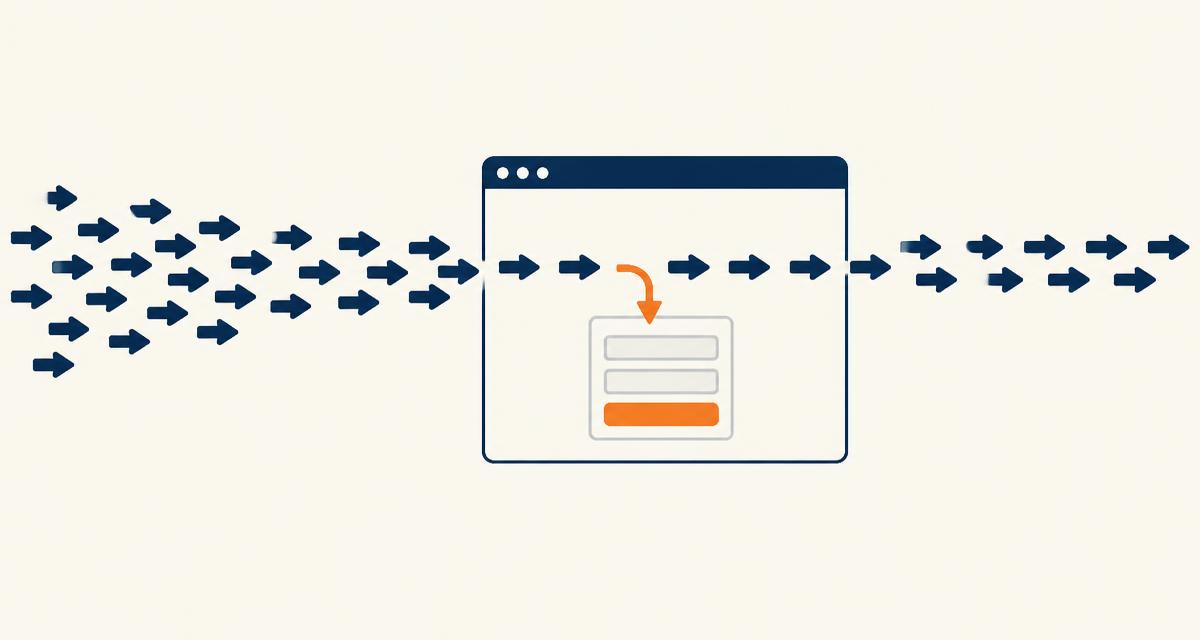
Traffic proves people can find you. It proves nothing about whether they believe you or can act. Here's where the drop-off usually happens.
Traffic with no enquiries is a more useful problem than no traffic at all: the hard part — getting found — is already working. What's failing is everything that happens in the thirty seconds after someone lands. Here's how to find the leak.
First, check the traffic is real
Not all visits are buyers. Before changing anything, split your analytics by source and landing page and ask three questions: are visitors arriving from searches that imply intent, are they landing on pages that can convert, and are they human. Bot traffic and social curiosity clicks inflate the numbers and depress the conversion rate at the same time.
If most of your traffic lands on a blog post and leaves, that's not a conversion problem — it's a routing problem. Informational pages need an obvious path to the relevant service page.
The five-second test on the landing page
People rarely start on your homepage. Open the pages your traffic actually lands on and check each one answers: what is this, is it for me, why you, and what do I do next. A service page that opens with company history fails all four.
A page that ranks well but reads like a brochure will collect visitors and convert none of them.
Look for the trust gap
This is the most common cause of traffic-rich, lead-poor websites. The claims are there; the evidence isn't. What closes the gap:
- Case studies with a real brief, a real decision and a real outcome
- Photography of your own work, not stock
- Named people, a real address, a tappable phone number
- A stated process — what happens after an enquiry, and when
Our selected work is structured around that principle. North & Co converts on galleries and before-and-afters; Ashworth converts on credibility. Same idea, different proof.
Then check friction
Friction is where warm visitors quietly give up:
- A form that asks for more than you need at first contact
- No call to action on pages other than the contact page
- Slow pages on mobile, especially on a weak connection
- Enquiry notifications landing in spam, or nobody watching the inbox out of hours
Send yourself a test enquiry today. Broken notifications look identical to 'no leads' and are far more common than people expect.
Measure, don't guess
Set up event tracking on form submissions, phone taps and email clicks, then look at conversion rate per landing page rather than site-wide. One weak page pulling heavy traffic can mask perfectly healthy ones — and tells you exactly where to spend your effort.
Where speed and structure come in
If mobile speed is poor, you're losing people before the copy gets a chance. Run the page through our free website score for a plain-English read on performance, mobile behaviour and technical SEO. If the technical side is fine, the problem is message and proof.
What we'd do next
In our experience the order of gain is clarity, then proof, then the enquiry route, then more traffic — the same sequence as a website producing no leads at all. If three or more things on this page sound familiar, it's worth reading the signs that justify a redesign before committing budget.
Rebuilding is one option; often it's three pages and a clearer route. That's what we work through on website projects, and further with custom tools and portals where the sales process needs more than a form. Send us the link and you'll get an honest read, including if the answer is 'don't rebuild'.