Guides
What pages should a business website have?
20 October 2026 · 6 min
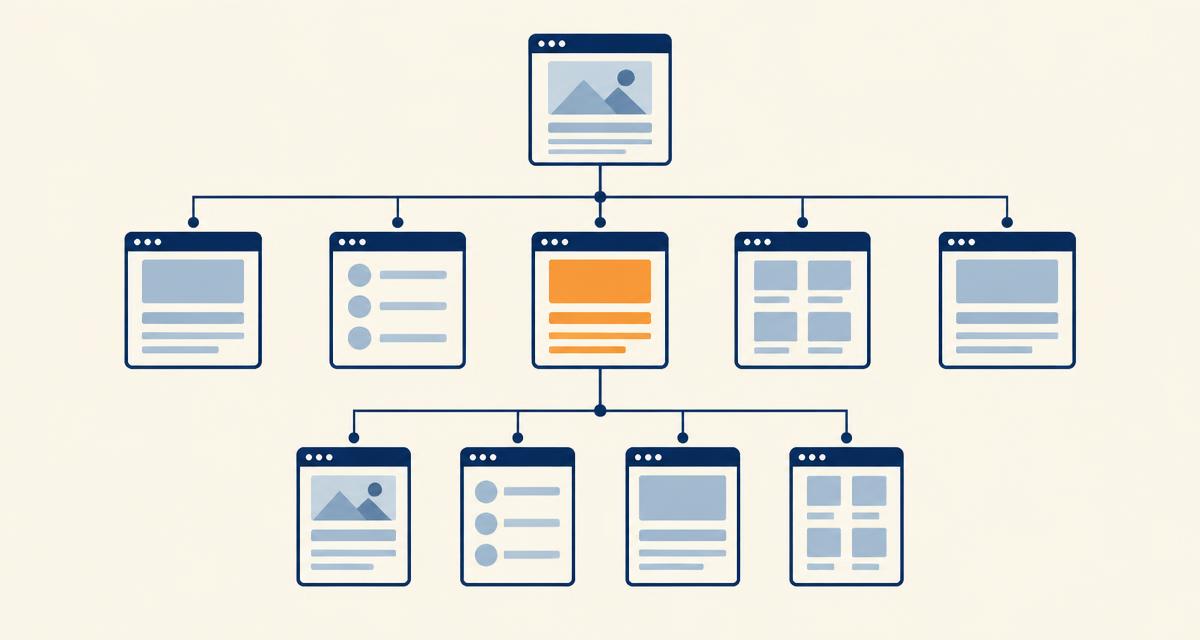
Fewer than you think, each doing one job properly. A page-by-page breakdown, the pages most businesses are missing, and the ones to skip.
Ask for a list of pages and most briefs arrive with fifteen. The better question is what each page has to do. A page that doesn't earn its place is a maintenance liability and a distraction for visitors — the strongest business sites run on five to eight pages, each with one clear job.
Home — the front door
One job: a stranger should leave the first screen knowing what you do, who for, and what to do next. The homepage then summarises everything else and routes people onward. It is not the place for company history or every service you've ever offered — we've set out the full structure in what a homepage should contain.
Services — one page per service
A single page listing everything you do undersells all of it. One page per service, written around the words customers actually search, is where most of the ranking potential in a small business site sits. Each page answers: what's included, who it's for, what it costs or how it's priced, and what to do next. If you serve several towns, a page per location genuinely served earns its place the same way — that's how we treat Liverpool, Manchester and Cheshire.
Work or case studies — the proof
The page that closes considered purchases. Real projects, real outcomes, photography of your own work. Claims are interchangeable between competitors; evidence isn't. Structure this section around the work itself, the way our case studies do — Voltworks leads with clear pricing and its service area, not a write-up.
About — the people
Buyers of anything considered check who they're dealing with. Named people, a real location, a plain statement of how you work. Written once, reviewed annually — it doesn't need to be a blog.
Contact — a route, not a form
A form, a tappable phone number, an email that a human reads, and a sentence about what happens after someone gets in touch. If enquiry notifications don't reliably arrive, this page is quietly eating leads — we covered that failure mode in why a website stops producing leads.
Every page should answer one question completely and offer one obvious next step. Pages that try to answer five questions convert nobody.
The pages most businesses are missing
- A page for your highest-value offer, given its own space rather than a line in a list
- A page per location you genuinely serve
- An honest pricing or 'how we work' page — it filters the wrong enquiries before they reach your inbox
- Ongoing writing that answers the questions customers ask: a blog, done properly, compounds for years
The pages you can skip
A testimonials page (put proof where decisions happen), an 'Our mission' page (nobody visits), a separate page per team member for a team of three, and anything built because a competitor has it. Every page you add dilutes the ones that matter and adds something else to keep current.
How to check your own structure
If a page can't state its one job in a sentence, it's a candidate for merging or cutting. For the technical side — how each page performs, loads and is read by search engines — our free website score gives you a baseline in about a minute. And if the structure itself needs rethinking, send us the brief — sometimes the answer is three pages, not a full rebuild.
Talk it through
Not sure what your website needs?
Tell us what you’re trying to fix. We’ll reply within two working days with an honest view, even if the answer is that you don’t need us.