Perspective
Is it worth paying an agency to build your website?
13 October 2026 · 7 min
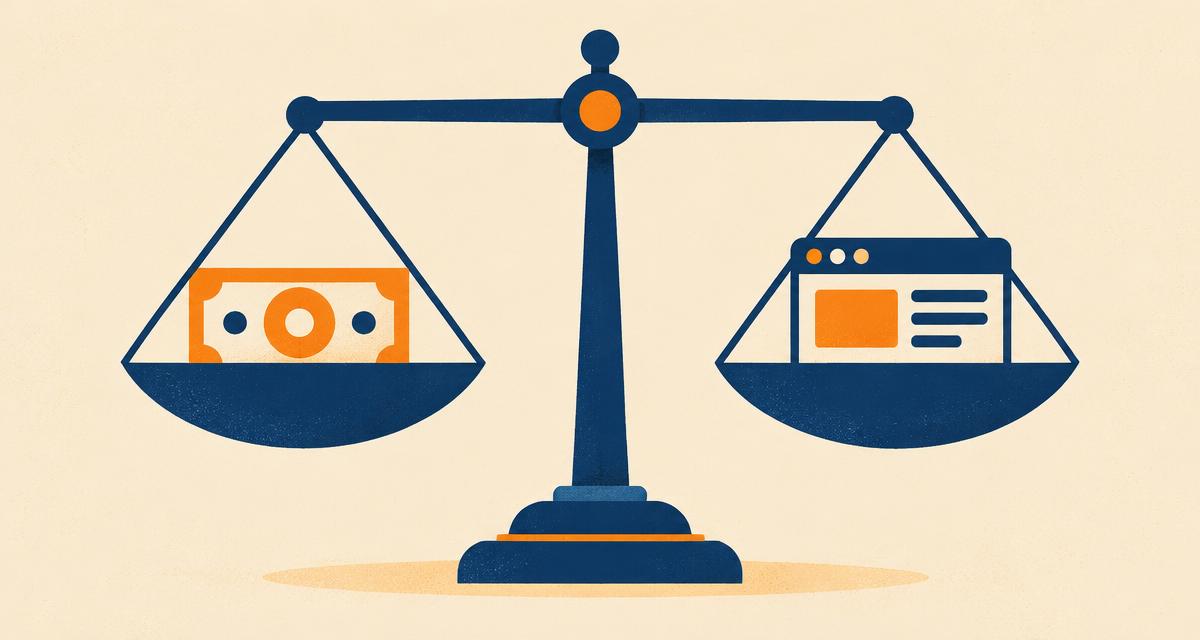
It depends what you're buying — judgement or just pages. An honest breakdown of where the money goes and when an agency is, and isn't, worth it.
The honest answer is that it depends what you're comparing. An agency invoice isn't buying pages — anyone can produce pages. It's buying judgement: what to build, what to leave out, and the accountability of a team whose reputation rides on the result. Whether that's worth it depends entirely on what the website has to do for the business.
What the money actually buys
Strip an agency project back and you're paying for four things: the strategy that decides what the site must achieve, the structure that turns visitors into enquiries, the craft that makes the business look like the figure it wants to charge, and the maintenance of all three. A freelance builder and a DIY platform can each deliver parts of that. Very few deliver all of it in one place.
For context on what each level costs in the UK right now, we've published the numbers in how much a website costs in 2026.
The alternatives, honestly stated
A DIY builder is the right call when a business is validating an idea or needs a simple presence this month. We say this to enquirers regularly — the reasoning is in bespoke versus template websites. Spending five figures on an unproven business is poor judgement, whatever the agency says.
A good freelancer is the right call when the strategy and structure already exist and you need execution. The gap appears when they don't: the freelancer quotes for a design task, the business actually needed a positioning decision, and the result is a handsome site that says the wrong things. You end up buying the strategy anyway — later, piecemeal, and usually twice.
The cheapest website is rarely the cheapest option over three years. It's the one most likely to be rebuilt.
Where an agency earns the premium
The premium is mostly saying no. Knowing which half of the proposed content to cut, which pages matter for search and which are vanity, which enquiry routes will actually convert for this kind of business. That judgement compounds: it shapes the build, the copy, the case studies and what gets measured afterwards.
You can see it in the outcomes rather than the process — our selected work ranges from product-led e-commerce to booking-led service businesses, and the decisions behind each are the part a template can't supply.
When an agency isn't worth it
Be suspicious of any studio that doesn't say this: if you're pre-revenue, if you have a capable in-house team who just need direction, or if the site genuinely is a digital business card — don't hire one. The money will do more elsewhere.
When it is
When considered enquiries are worth thousands and the site is expected to win them. When you need to rank for searches that matter and stay ranked. When the sales process needs more than a form — portals, client areas, automation — which is the work behind our websites service and digital products. In those cases the site isn't a cost line; it's the thing the revenue runs through.
How to judge the investment
Ignore the invoice for a moment and work out the cost per enquiry: project cost divided by the enquiries it should produce over two to three years, against what one customer is worth. A £10,000 site that reliably wins two good clients a quarter is cheap. A £1,000 site that wins nothing is the expensive one.
Our own process starts from that arithmetic — how we scope a project walks through it. And if you tell us the brief, you'll get a straight answer on whether an agency is worth it for your situation, including when it isn't: send it over.
Talk it through
Not sure what your website needs?
Tell us what you’re trying to fix. We’ll reply within two working days with an honest view, even if the answer is that you don’t need us.